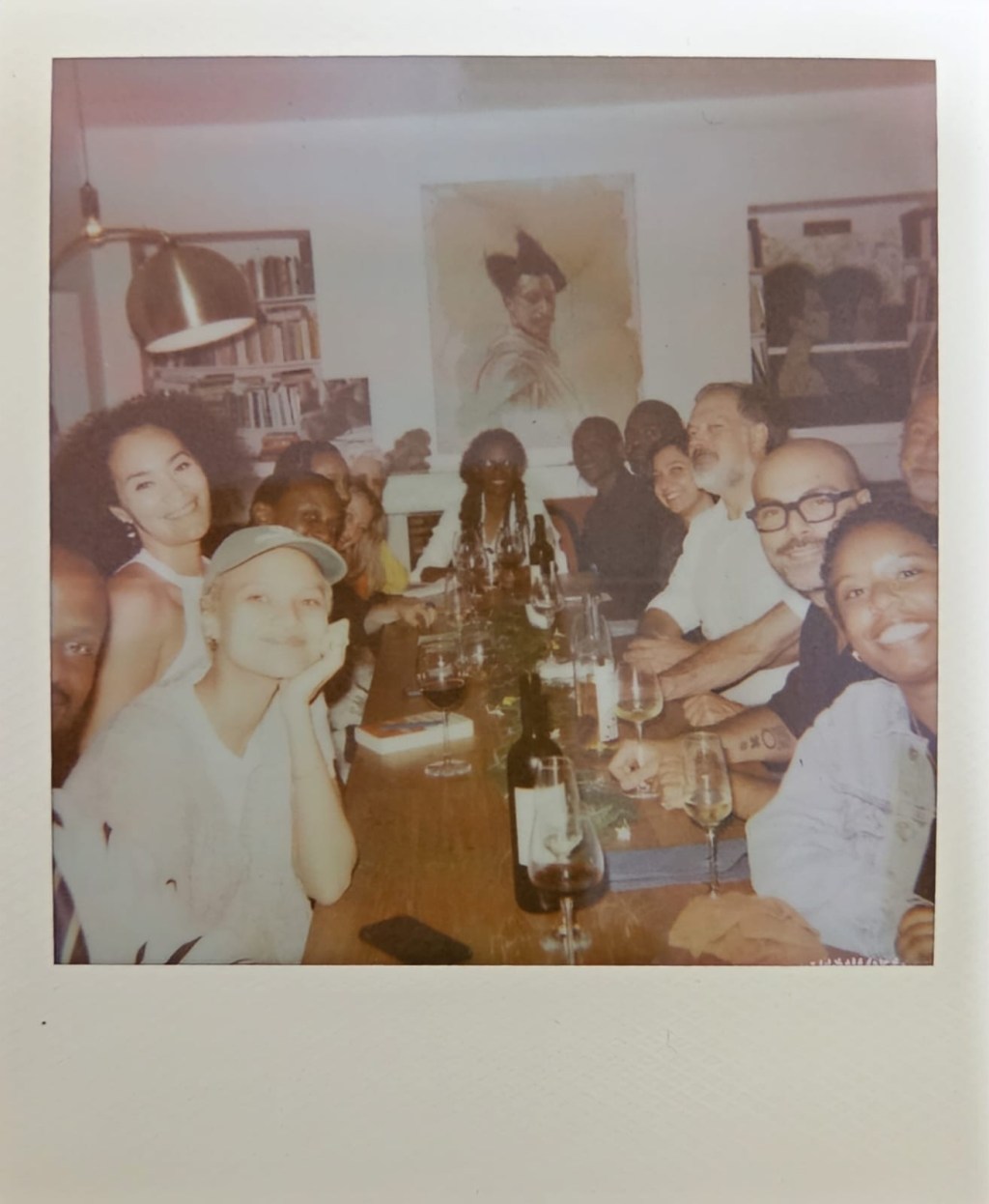
To map out this reflection, a set of questions will unravel: What does it mean to feel at home in places you have never been? How are we supporting artists both locally and globally? How can we create more room for dialogue and critique to support artists?
These are the questions that sat on my chest as I boarded the flight back to Miami from this life-changing experience as an American Friends of Zeitz MOCAA 2025 US-Based Curator Grantee in Rwanda and Uganda.
I want to speak first to the impacts of being nominated by Rosie Gordon-Wallace, and then being selected by the jury to embark on this journey. Within my curatorial practice, it is my mission to create spaces for artists to take up, to be of aid just by asking questions, to replace curatorial interrogation with care, and maybe that is born from being an artist first, writer and curator second. To be seen in this way and given this opportunity to join a journey led by practitioner Koyo Kouoh, whose work has deeply inspired me, especially regarding curatorial frameworks that “rethink the white cube, synonymous with today’s commercial art galleries and big museum exhibitions.”
My motivational synopsis before receiving this life-changing award read the following:
My motivation and determination to attend this experience stem from my deep desire to explore artistic narratives, threads of connectivity, and layers of labor within diasporic artists and institutions. As a first-generation Caribbean Afro-Latina practicing curator, I seek to bridge gaps by engaging with artists who reflect on the Black and Caribbean aesthetic through the lens of the immigrant experience in North America. This trip will expand my lens to look more towards the global Caribbean and African diasporic intersectional lens.
My curatorial practice intensely focuses on the intersectional ways that practicing artists reflect on memories to inform their work and create conversations that speak to home, culture, and vulnerability. This grant would undoubtedly notify me of the practices and conversations percolating in the East African region and enhance my practice by introducing me to additional methodologies for developing more frameworks that emphasize the critical importance of artists’ archives in telling stories of identity and the geographical impact on marginalized communities.
The passing of Koyo Kouoh, just a few months before the curated art tour, devastated me in ways I could not yet comprehend. How does it feel to mourn those you never met? How do you grieve those whose work and words still guide you in your practice? How do you reconcile with no longer being able to meet one of your heroes on a trip they so care-consciously curated? These questions lingered in the lobby of my nervous system, but seeing how Claire Breukel nourished and continued Kouoh’s mission regarding the trip while navigating her own grief was so powerful that it pushed me to focus on showing up as myself and to remind myself to be ever-present in every moment.
The moment my plane landed in Kigali and I gathered with other members of the trip, a bubbling excitement and nervousness floated in my chest. Nervous because I still questioned my worth as a curator and whether I was the right ‘fit’ to receive this award. Reflecting on the many tender moments, laughs, tears, hugs, and extensive conversations, I laugh in the face of my imposter syndrome, almost trying to take it in stride at the start of this journey.
Kami Gahiga, Rwandan Contemporary art curator and art specialist, began our journey in Kigali at the Pinnacle Hotel, where we were guided through communal spaces showcasing contemporary African art to enhance the elegant setting and support local artists. It always electrifies me to think of ways art not only activates a gallery space but also aids in how people convene, gather, and find comfort in hospitable spaces. Following the visit to the Pinnacle Hotel in Kigali, Gahiga warmly guided us to the home of architect, artist and collector, Paul Semanda-Gahitsi, for a welcome dînatoire.

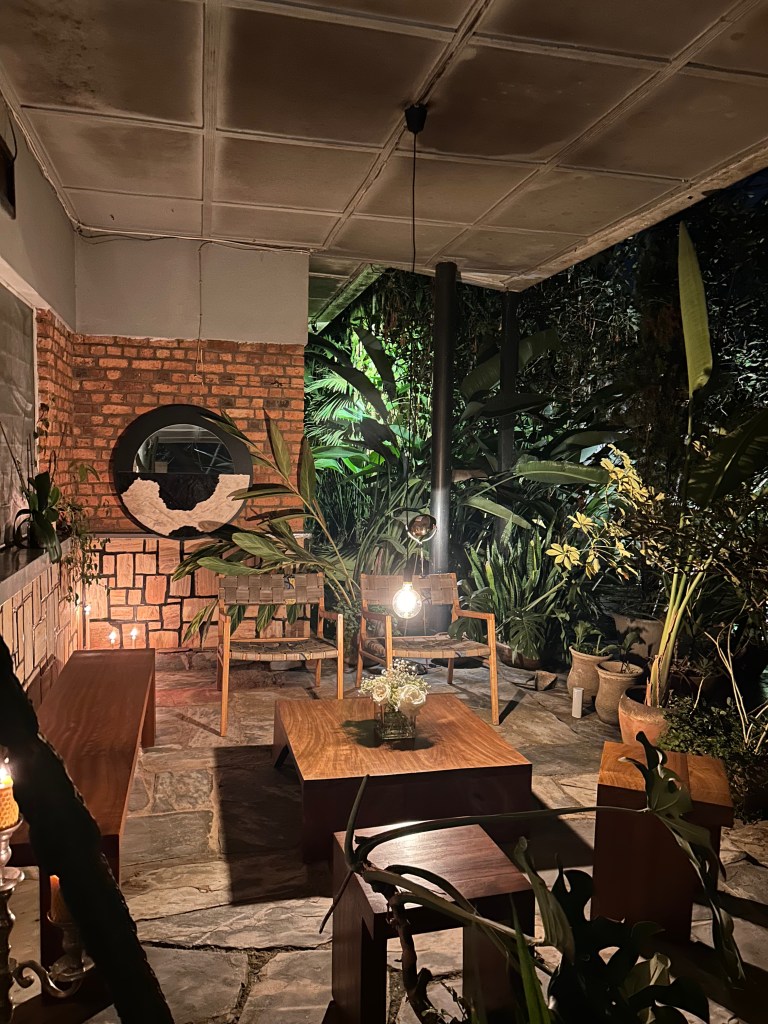
Gahitsi’s home was a soft-toned, warm sanctuary, held by large cactus trees and a plethora of plants. Upon entering, we’re met with an outdoor arrangement of walnut-brown wooden furniture arranged in a gathering circle, with low-hanging lamps. Gahitsi’s home felt like a hug. The art in his home, in conversation with his furniture pieces, tugged at you to get closer, sit, and digest. In this space, my tender friendship with Zeitz MOCAA Curator Beata America began. In Gahitsi’s tropical sanctuary, seated on handmade wooden benches, America and I unpacked our curatorial woes, dreams, and experiences. At this moment, our bond was cemented.
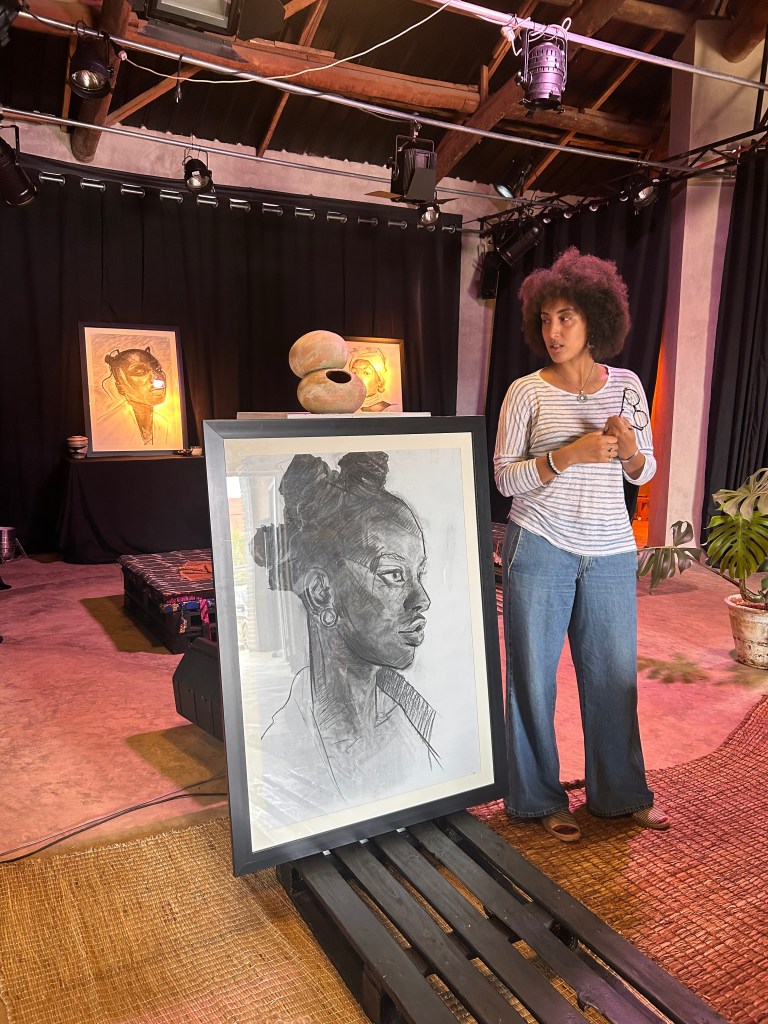

In the next two days in Rwanda, we visited art spaces such as Inema Arts Center and L’ESPACE, whose mission is to support local artists in Kigali with space to nurture professional artistic development and a place to sit with their work. The solo exhibition by Rwandan artist Sophie Kabaka, curated by Ethiopian curator and artist Luladey Teshome, was on display at L’ESPACE during our visit. In this exhibition, we see drawn portraits of Kabaka’s community, and elements of her family memories adorn the space, speaking to aspects of home. I particularly loved the element of having the portraits seated on a table, as if each member of Kabaka’s community were gathered with us.
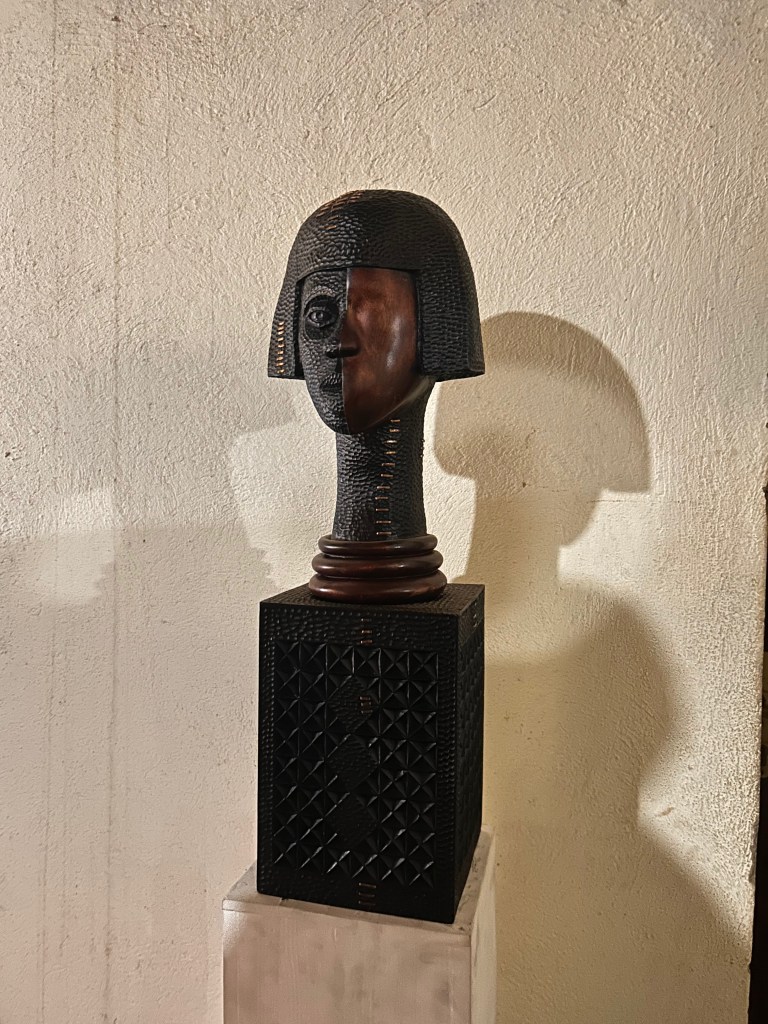
We visited the studios of Claude Nizeyimana and Richard Mwizerwa. Nizeyimana’s sculptures left me captivated in his dimly lit studio, adorned with black and brown wooden and copper busts that sit on sculpted crates. Half of the figure’s face is hollowed and smoothed out, while the remaining half depicts the facial structures that demand your attention.
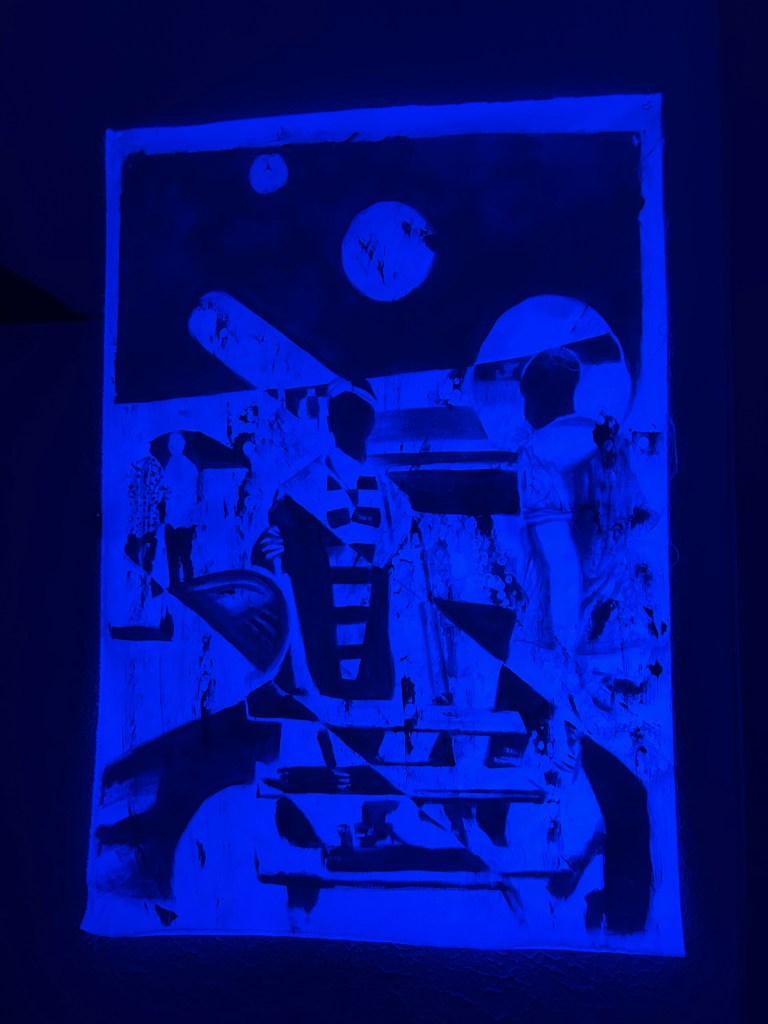
Mwizerwa’s richly textured, vibrant-in-depth landscape paintings met us at the door, but it was really these abstract figurative paintings, flooded by UV black light and taking on new life, that bolted me in place. In these paintings, Mwizerwa brings us on his journey of observing everyday life and activity in Kigali. Circles and curved rectangular shapes intersect the scene, offering glimpses of the many figures and objects that meet Mwizerwa on his daily walks.
Visiting the Kigali Genocide museum reminded me how museums also function as memorial sites, a place for people to grieve and mourn those lost and a place for people to learn of this traumatic time in history that in so many ways impacts generations of Rwandans. The gallery staff guided us through each point in history to how this genocide began, how many lives were lost, and even how it has impacted the many ways artists discuss this history in their work. Heaviness and deep sadness swam in my chest during this visit, while also reflecting on how we are seeing this history repeat itself in real time with what is currently happening in Palestine. How can museum institutions also be of aid concerning these tragic events in history?
Some of my favorite highlights from our time in Rwanda were the avant-première visit and dinner at Gihanga Institute of Contemporary Art, and the vegan dinner at the home of Jeanine Munyeshuli. At both gatherings, I was told, with warm smiles and tender hugs, ‘Welcome Home.’ These words wrapped me up in a warm embrace, because even though this was my first time on the continent, I truly felt at home. I felt safe, seen, heard, and nourished.
Two days in Uganda were not enough. I vow to return because the energy in this country is electric! The common thread across each incredible studio visit was the deep commitment to their practice and its service to their communities. Our first studio visit was with Xenson. A compact, square-like doorway led us to an artistic estate, where his garden was laid out, with significant fiber artworks made of barkcloth and several of his figurative paintings standing tall amongst the flourishing trees surrounding his land. Xenson spoke to us about his extensive artistic practice and working with barkcloth — a material derived from trees also found in Uganda that undergoes stripping, soaking, and beating until the inner bark transforms into a fiber-like material.
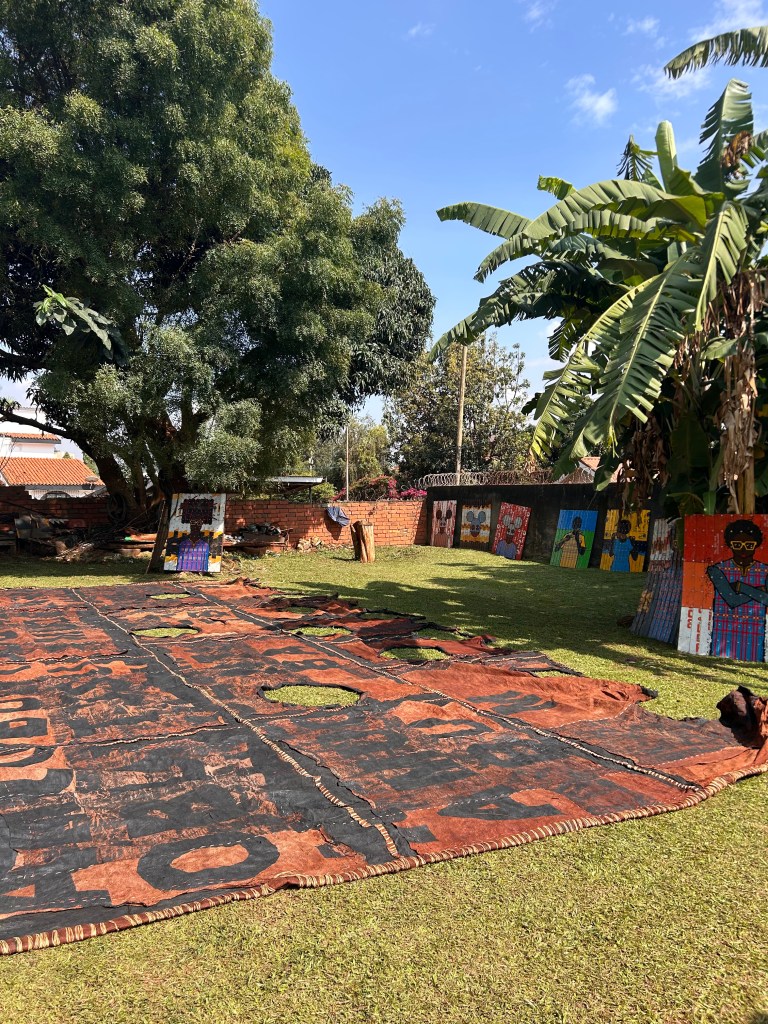
It was so inspiring to hear how Xenson is constantly seeking out colors and recycled materials to incorporate into his practice, reflecting aspects of his lineage and ancestry in Kampala, Uganda. Also, the intersections of his identity, childhood memories, and his love for hip-hop in conversation with his choice of materials reminded me of the power of exploration and memory work. Xenson also founded Xenson Art Space, an incubator space in Kampala for artists and curators to gather, exhibit work, and hold conversations about their practice.
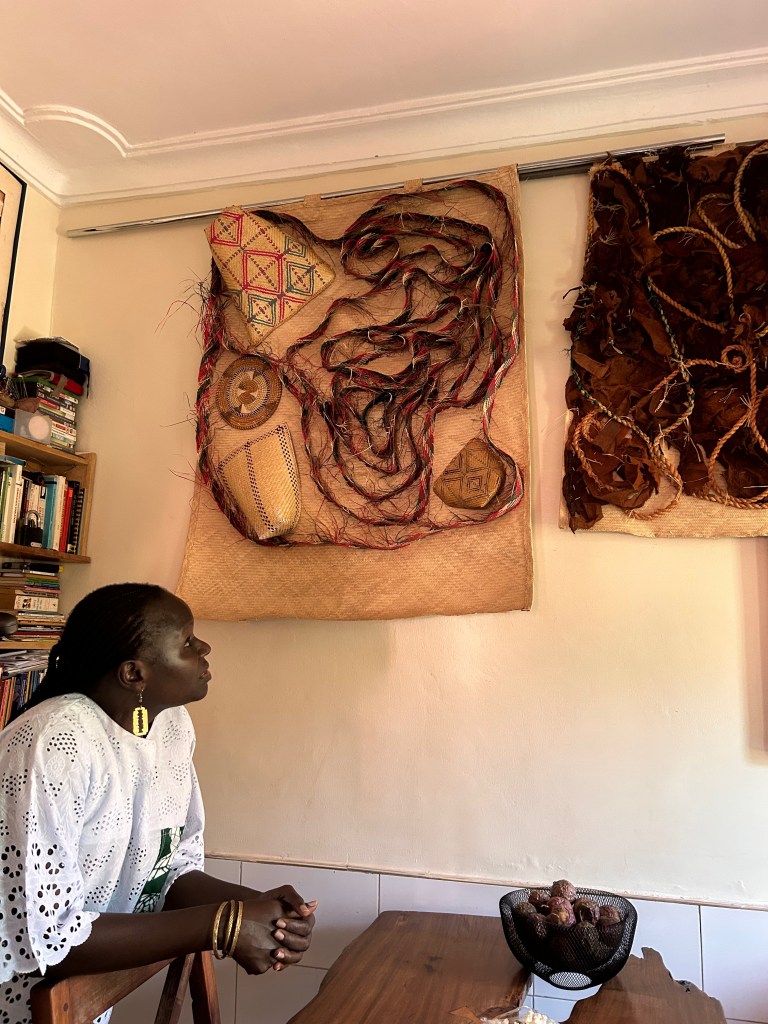
The studio visit with Acaye Kerunen often lingers in my heart. The tender hug we shared upon entering, the combination of coffee and popcorn awaiting us inside, and the warm way Kerunen guided us through her sculptural artwork process were nothing short of incredible. Kerunen spoke of how she opens her home and studio to women in the community to gather, share stories, and create work together, as this aspect heavily informs her work, which seeks to dismantle and investigate colonialism in African women’s artistry, such as weaving. I honestly could have stayed in that space and listened to Kerunen’s stories for days.
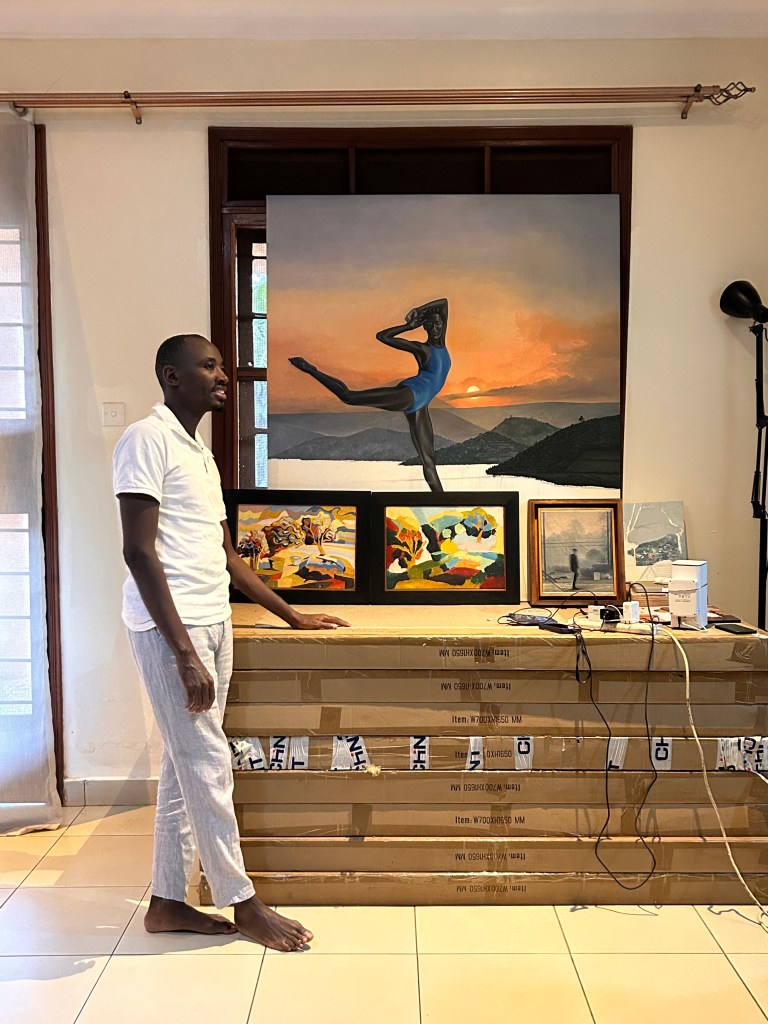
I’ve been a massive fan of Ian Mwesiga’s work for quite some time now and have always been so drawn to the figures in his work. There seems to be a consistent reflective act in his work, where the figure stands in mirrored moments, yet there is a moment when the viewer is confronted and almost left to reflect on the scene. Seeing more of his work up close and talking to him more about his practice left me starstruck. In these moments, I found myself pinching myself to remind myself that I am experiencing this magical journey of being warmly guided in the homes, studios, and gallery spaces of Rwandan and Ugandan artists and practitioners who are making incredible work and taking up space, while allowing room for so many others.
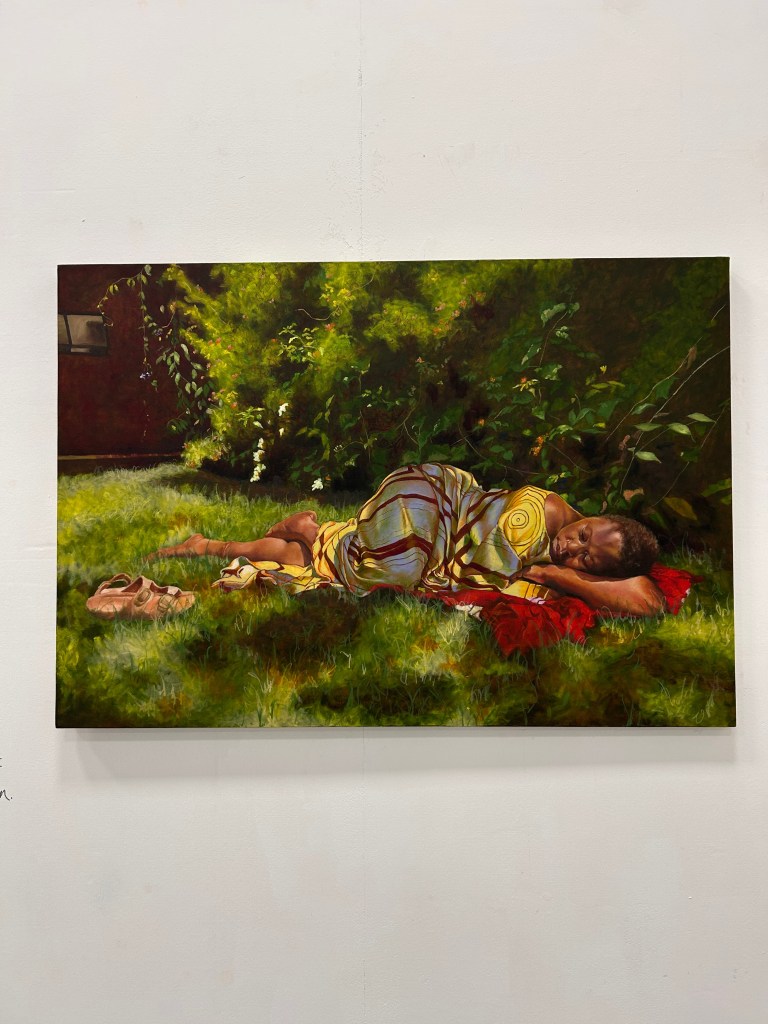
On the last evening of the trip, our fantastic guide in Uganda and founder of Afriart Gallery, Daudi Karungi hosted our group, many of the artists we had the blessing of connecting with earlier and other members of the community for a lovely dinner and preview of Fabric of our Being, a solo exhibition by April Kamunde that features paintings of African women at rest and at leisure.
While in my Uber ride to the airport, I found myself overcome with emotions. I felt an abundance of eternal gratitude to every artist and practitioner that allowed us into their safe spaces and shared their stories and work with us, to Rosie Gordon-Wallace for nominating me for this life changing experience, Claire Breukel for continuing this journey on Kouoh’s behalf and for the entire Zeitz MOCAA group that allowed me the space to join them and exist as myself in this trip.
I left, asking myself as a curator how I can further cultivate space for artists to take up. How am I nourishing artists to consider their legacy? What are the ways I can continue to pay it forward and be of service to artists, not just locally but globally? This trip reminded me of the power of asking questions, sharing stories, and gathering. The journey continues.
 The Curatorial Forum
Leave a comment