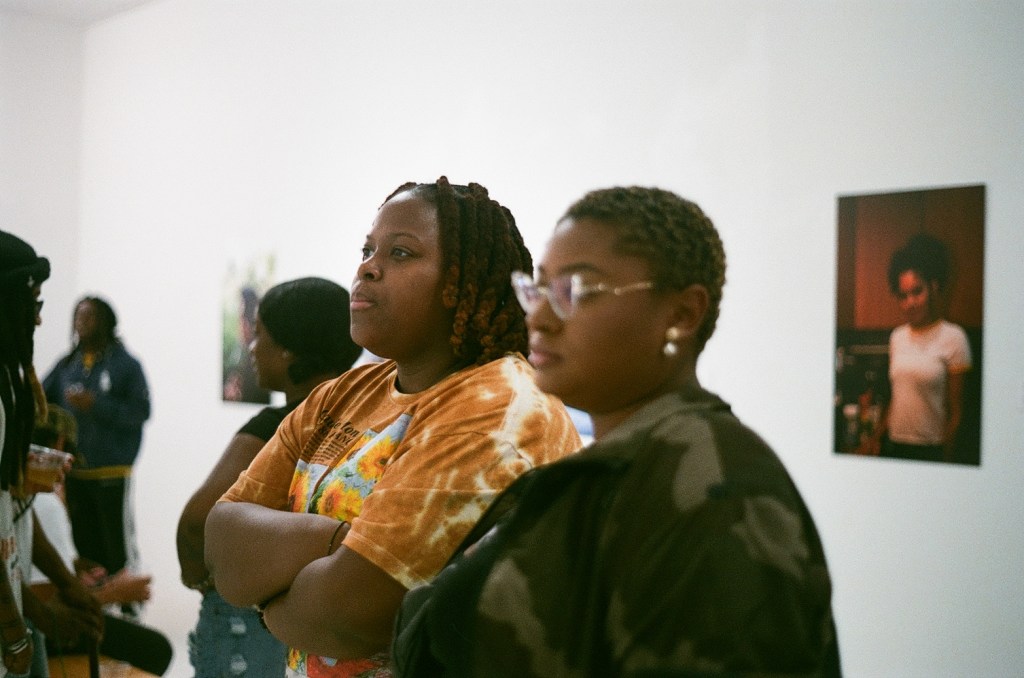
In the book Gender, Sexuality and Museums, Hilde Hein expands on the aspect that the traditional museum collects and explains the world by assigning categories to objects, analysing them, for example, in terms of their material composition, origin, ownership, or typical use, feminist theorising resonates more emphatically with the contextual, the specific instantiation of things in previously unacknowledged interpretive networks. (Hein 55). This quote highlights the traditional structural nature of museums and galleries to utilise patriarchal strategies when concerning art and displays. Feminist theory challenges the aspect of how museums and galleries interpret gender, sexuality, oppression, and overall “otherness.”
To be able to understand feminist approaches, we have to first understand the varied definition of feminist theory. Feminist theory is an assemblage of interdisciplinary tools and critical engagements concerning the politics of gender, sexuality, and oppression within structures of power in a phallocentric society. Within this essay, I will mostly reflect upon Intersectional Feminist theory when discussing feminist approaches to art, display, and collecting within art institutions. The term ‘intersectionality’ coined by Kimberle Crenshaw was created to explain the experiences of Black women who – because of the intersections of race, gender, and class – are exposed to exponential forms of marginalisation and oppression. (Intersectionality & Higher Education, Mitchell, Jr., Donald et al.). Intersectional Feminist theory reflects upon the ideology that by acknowledging the sameness and intersections of differences that individuals carry, we can understand the multitudes of marginalisation within society.
In this essay, I will unpack and expand upon how the politics concerning intersectional feminist approaches to art, display, and collecting within museums and galleries have challenged traditional museum practices. Drawing upon accounts of Raewyn Connell in The Social Organisation Of Masculinity, Hilde Hein in Gender, Sexuality and Museums, Viv Golding in Feminism and the Politics of Friendship in the activist museum, and Nikki Sullivan in Queering the Museum will support my argument that intersectional feminist approaches to art, display, and collecting within art institutions has not only challenged but revolutionised traditional museum practices. With the support of the House to House: Women, Politics, and Place Exhibition that took place at the Frost Art Museum in Miami, Florida USA and Sasha Huber’s YOU NAME IT recent exhibition at the Autograph Gallery in Hackney, London I will explore the impact and distinction between the feminist approaches within both exhibitions to support my claim.
Through a critical analysis of Queering the Museum and Zanele Muholi’s visual survey at the Tate Modern, I will discuss the impacts of the intersection of queer representation within feminist art approaches within museums and galleries. Foregrounding the feminist perspective when looking at museums that Hein expounds upon within Gender, Sexuality and Museums, I will also discuss how Women Museums such as the Vagina Museum in London have created new frameworks when concerning feminist approaches to curation and how that sets them apart from other art spaces.
In The Social Organisation of Masculinity, Connell stresses that hegemonic masculinity embodies a currently accepted strategy. When conditions for the defence of patriarchy change, the bases for the dominance of particular masculinity are eroded. (Connell 10). This idea is still prevalent in society today when we look at these patriarchal art institutions still upholding these frameworks that promote the oppression of inequality towards women, minorities, and non-binaries. For example, the fact that there is currently still a short percentage of women artists featured in museum collections within the US and in the UK. According to Connell, to continue the work on eradicating these infrastructures we have to erode the hegemonic masculinity framework.
The traditional museum approach concerning displays and collections mimics the hegemonic masculinity framework of the persistent exclusion of women and non-binary artists concerning power and production within art institutions. According to Hein, feminism makes a common cause with various minority, postcolonial, racialized, gendered, and multicultural analyses which have inspired certain museums’ exhibition practices. Thus this gets one to question the validity of the site and environment in which the feminist approach to art, displays, and collections is prescribed. As Connell mostly suggests that hegemonic masculinity frameworks are more visible within sites of infrastructures such as schools, prisons, and politics. Whereas the museum and gallery spaces have always been a site for educating and experimentation when it concerns showcasing varied representations, but traditionally have an approach that appropriates the audiences they intend to target.
There are two critical points that Hein addresses in her chapter, one being that feminist theory approaches the display of emotion as a complex phenomenon infused with cognitive history and understanding. (Hein 55). This means that curatorial approaches derived from feminist theory have a more focus concerning artworks within the collection or on display that evoke a sense of understanding of society and how its many structures of power have impacted how we look at gender, sexuality, marginalisation, and so forth. When I assess this aspect, it brings me to question the way most museums work to suppress a certain level of emotion when concerning their exhibitions and collections to reach diverse sets of audiences and seem universal.
That understanding relates to Connell’s description of the hegemonic masculinity framework, where there is a universal suppression of emotions and representation within patriarchal art institutions to retain power. Another point that Hien makes within her chapter that also connects back to Connell’s descriptive hegemonic masculinity framework is the fact that museums also function as hierarchical power structures. Hein notes that hierarchy persists in more subtle ways, notably in the organisation and assessment of museum content. Hein goes on to break this down by noting the traditional museum importance of holding collections of what is considered fine art over what is considered craft. As most masterworks that are considered fine art are not always created by and for audiences of intersectional backgrounds, but yet hold such a weight within most museum and gallery collections.
Concerning the hierarchical structure within museums, most of the heads of curatorial or exhibition design departments tend to be men who feed into the hegemonic masculinity framework when concerning museum content. There has been a shift to more women-led curatorial departments, which has led to more feminist approaches to exhibitions and collections. One example of this I want to analyse to support this claim is the House to House: Women, Politics, and Place exhibition that took place at the Frost Art Museum in Miami, Florida USA in 2020.
This group exhibition was curated by the Frost Art Museum’s chief curator of exhibitions, Amy Galpin. This group exhibition consisted of multimedia works created by different women and non-binary artists. Galpin uses an intersectional feminist approach of surveying artworks and artists that explore the notion of the domesticity of the “home” space and how it has confined women while focusing on the multiple ways women as active participants in society have had to demand visibility, social justice, and empowerment within society. Within this exhibition, Galpin made the curatorial decision to approach the exhibition from an intersectional lens by showcasing a range of artworks that explore the idea of home and how it can also represent a space of oppression depending on the environment. What made this feminist curatorial approach so significant is that it was set in a museum that is a part of Florida International University, which is a university that prides itself on creating space for students that come from all walks of life.
In an interview with Cultured Magazine, Galpin quoted that “the show acknowledges that feminism has not always been inclusive and seeks a diverse narrative.” Thus this inspired her to create an exhibition that ranges from doll house sculptures to an episode from Octavia Yearwood’s docuseries titled, The Tranz Form. I believe the curatorial decision to include this episode was so insightful, being that the trans women present in the episode are filmed discussing their experience and challenges creating a sense of home in Miami, Florida while also feeling the need to leave the city. To have a work of this nature being presented in the same city that it is showcased in is a key example of how feminist approaches to art and display challenge the expectations of museum spaces when concerning how exhibitions create a discourse around the environment they are located in and how communities within it still face oppression while still seeking a sense of home.

Installation shot of Aurora Molina’s Woven Destiny mixed media artwork in the House to House: Women, Politics, and Place exhibition in Miami, Florida (USA)

Installation shot of Miss Lucy’s Dollhouse in the House to House: Women, Politics, and Place exhibition in Miami, Florida (USA)
Another exhibition example that I believe closely relates to the points that Hein addresses in her chapter, Looking At Museums From a Feminist Perspective, that also showcases the impact of how feminist approaches are challenging the museum space is the recent Sasha Huber solo exhibition titled, You Name It at the Autograph Gallery in East London. Both the curators and Huber approached this exhibition from a feminist theorised lens of approaching colonial history and the emotions surrounding remembrance in a way that evokes a strong sense of feeling for audiences that came into contact with this work. The way that the Autograph Gallery approached this show stands apart from how other photographic institutions have approached shows centered around social justice. By that I mean it was not just an array of photographs that showcased the journey of Huber’s research, but it was a multitude of mediums and installations that had a way of truly tugging on the consciousness of viewers who witnessed this show.
In the chapter Looking At Museums From a Feminist Perspective, Hein quotes that for museums, as for feminist theory, the aim is to depict differences in comprehensible contexts, appreciating their plausibility without arbitrarily favouring a given set of values. The point of the theory is then taken to be the enhancement of understanding and not the assurance of certainty. (Hein 57). This is what the curators of Huber’s show at the Autograph Gallery applied to the You Name It exhibition by displaying the works of Huber in a manner that didn’t leave room to favouring any set of given values but rather offered a clear window into the colonial history and trauma that Huber address through her work. How they did this was through the exhibition’s introduction text, in which they introduced the Swiss-born glaciologist and racist Louis Agassiz and how his scientific contributions to the fields of glaciology, paleontology and geology resulted in over 80 landmarks bearing his name on Earth, the Moon, and Mars. Right next to this, they state how less well known, however, was Agassiz’s legacy of ‘scientific’ racism, and how he used his position to actively promote the subjugation, exploitation, and segregation of Black people and other people of colour. Through this language and initial approach to the exhibition, they have already challenged how museums exhibit colonial history without presenting Huber’s artworks within value-free standards. With each label next to their corresponding artworks there was an acknowledgement of Huber’s research and how it connects back to the enhancement of understanding the impacts of Agassiz’s scientific contributions. Thus this reiterates the idea of how feminist theory approaches museums and gallery displays to deal with the dilemma head-on.

Installation shot from Sasha Huber’s You Name It exhibition at the Autograph Gallery in Hackney, London.
The consistent reproduction of heteronormativity and social inequality when it concerns certain museological practices has also led to a queer theorist approach when concerning art and displays with museums and galleries. Within feminist approaches, what sets queer theory apart is the way of looking at the absence of LGBTIQ+ objects within museum collections and applying it to curatorial strategies when displaying the histories and lives of LGBTIQ+ communities. In Queering the Museum, Nikki Sullivan and Craig Middleton discuss how there has been an increase in museums and galleries paying attention to LGBTIQ+ histories and communities by exhibitions that respond to them. The issue is the methodology which still favours traditional museum approaches such as failing to critically interrogate how notions of gender and sexuality are culturally constructed in contextually specific ways and with other vectors of identity – in particular race, class, ability, and so on. (Sullivan et al, 44). The way that queer theory approaches have challenged museum and gallery displays is not just looking at the absence of LGBTIQ+ objects with collections, but also creating exhibitions that question the role that museums play in how viewers interact with artworks that call attention to gender, sexuality, and environment.
We see an example of a queer theory approach when looking back at Zanele Muholi’s visual survey at the Tate Modern Museum from 5 November – May 2021. This exhibition showcased over 260 photographs that span four of Muholi’s significant photographic series. The work of Zanele Muholie explores and documents the lives of South Africa’s LGBTIQ+ communities. The Tate Modern Museum utilised its grand collection of Muholi’s work and put together Muholi’s first UK survey by placing all of their series in conjunction with one another. What made this exhibition so significant and aligned with a queer theory approach was how the Tate Modern Museum utilised its collection of Muholi’s photographs to challenge dominant ideologies and how queer representation is presented within museums. Tate Modern does this by showcasing Muholi’s photographs that highlight the love and intimacy between the documented South African LGBTIQ+ individuals in the face of political trauma, prejudice, and violence that many of these communities face without attending to a heteronormative standpoint.

Miss D’vine II by Zanele Muholi shown at Tate Modern.
Through the analysis of feminist and queer theory approaches to art and displays, has brought me to look into the distinction between Women’s museums and certain feminist approaches within non-women museums. Women’s museums such as the National Museum of Women in the Arts in Washington D.C and The Museum of Women in Canada were created to dedicate to the visibility of women within the museum space and preserve women’s history.
Also important to note that most of these museums are founded by women and consist of a less hierarchical nature within the museum staff. A quote from The National Museum of Women in the Arts and the Museum of Women: Preserving Women’s Heritage and Empowering Women article by Julie Botte further supports the significance of Women’s museums is the following that, “Women’s museums are diverse; they reflect political, cultural, artistic, economic and social roles and situations of women in the past and present. They preserve and generate women’s cultures, remove prejudices and contribute to the respect of women and human rights. They are the mirror of society and also of the changing of the world. (Botte 20). Even though the feminist theoretical approaches to art and displays challenge how we navigate theories such as intersectionality and interact with gender within the museum space, it is still a bit temporary. Thus this quote supports the idea that Women’s museums are distinctive from feminist approaches within other galleries because they are permanent spaces dedicated to the representation of women and the enhancement of the role of women within collections. Feminist approaches to art and displays take on different tones within heteronormative museums and women’s museums.
To explore this distinction I will explore and analyse the Vagina Museum in London. The recently closed Vagina Museum that sat in Bethnal Green, London was dedicated to challenging heteronormative values, promoting intersectional feminist values, spreading knowledge and creating a space that de-stigmatises stigmas surrounding the vagina. I was able to visit this space the day before they closed their doors and was in complete awe and admiration of what I saw. It wasn’t just the feminist approach to showcasing artworks that relate to their mission, but there were also lots of passages alongside artworks that were placed to create an educational experience for visitors. This gallery was very text-heavy, which was useful in the sense that the artworks did not just speak for themselves. The text offered an immersive element to learning about different stereotypes, histories and rituals concerning the vagina that still influence our society today. From speaking with one of the staff members, even in their next space the Vagina Museum will continue to be a permanent space dedicated to their mission as a forum for feminism, women’s rights, the LGBTQ+ community and the intersex community.
Understanding the varied definitions of feminist theory and its many approaches to art has led to an understanding of how curatorial approaches derived from feminist theory have a more focus concerning artworks within the collection or on display that evoke a sense of understanding of society and how its many structures of power have impacted how we look at gender, sexuality, marginalisation, and so forth. Through critically analysing the feminist approaches used within the House to House: Women, Politics, and Place Exhibition that took place at the Frost Art Museum in Miami, Florida USA and Sasha Huber’s YOU NAME IT recent exhibition at the Autograph gallery in Hackney, London to explore the impact and distinction between the feminist approaches within both exhibitions has led me to conclude how significantly these approaches challenged how we engage with gender politics within museums. Furthermore, the analysis of these two exhibitions has led to the unpacking of the queer theory approach to art and displays. Thus this unpacking has led to the conclusion of how queer theory approaches art directly dealing with the absence of LGBTIQ+ objects with collections, but also creating exhibitions that question the role that museums play in how viewers interact with artworks that call attention to gender, sexuality, and environment.
Lastly, understanding the distinction between Women’s museums and museums that utilise feminist approaches to art has led me to how feminist approaches to art and displays take on different tones within heteronormative museums and women’s museums. Thus looking at the temporary nature of feminist approaches to art in non-women museums leads one to understand the permanent impact of women’s museums when concerning creating space for women artists and a more inclusive museum collection. Exploring the Vagina Museum has led to a conclusion of how important women’s museums are for spreading awareness, knowledge and histories that have been absent in the traditional museum space.


 The Curatorial Forum
Leave a comment